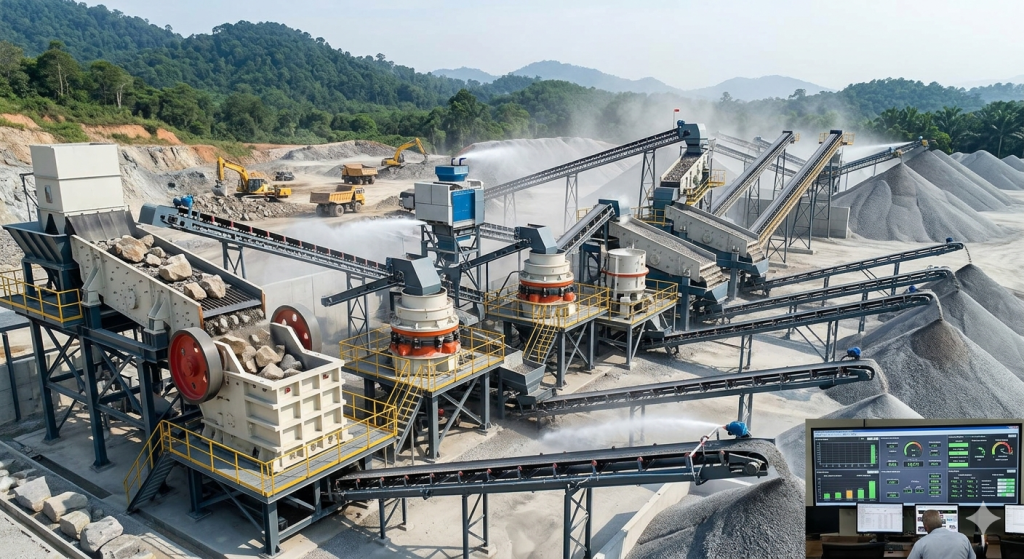
As Malaysia’s infrastructure landscape accelerates—driven by mega-projects like the ECRL and urban expansions in the Klang Valley—the demand for high-grade construction aggregates has never been higher. To meet this need, quarry operators are moving away from fragmented setups toward high-capacity, 500+ TPH (tonnes per hour) integrated production lines.
Engineering a site of this scale in Malaysia requires more than just raw power; it demands a strategic configuration that balances high output with the specific geological challenges of Southeast Asian rock.
1. The Powerhouse Configuration: Primary Crushing
For a 500+ TPH output, the journey begins with a heavy-duty Vibrating Grizzly Feeder. In Malaysia, where raw granite often contains clay or fine soil from the overburden, pre-screening at the feeder stage is critical to prevent downstream clogging.
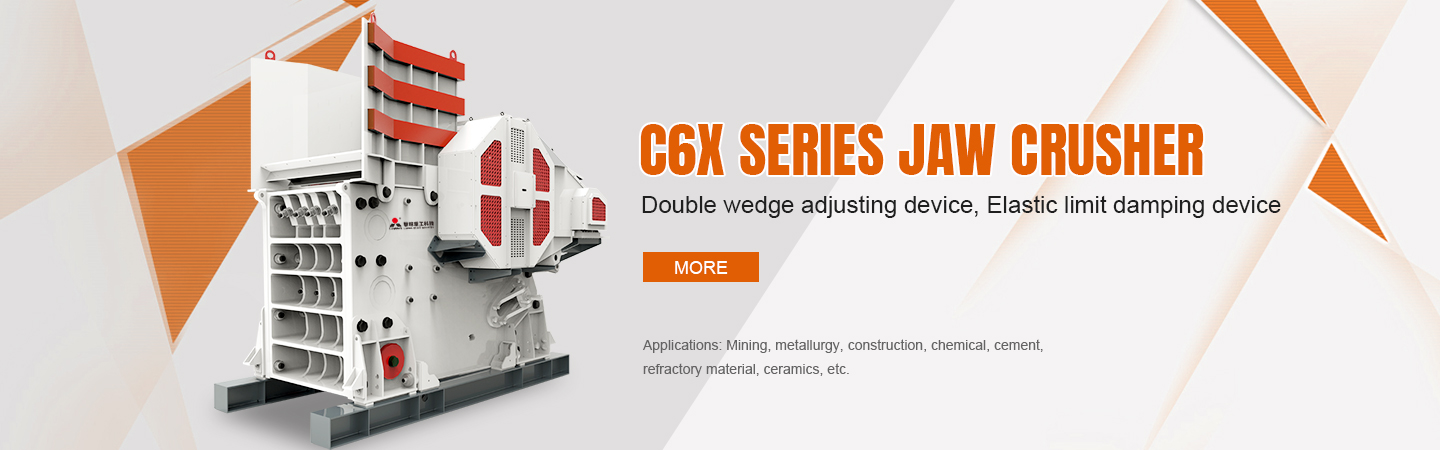
- Core Equipment: A large-scale Jaw Crusher serves as the primary station, designed with a deep crushing cavity to handle feed sizes up to 1000mm.
2. Precision and Durability: The Secondary & Tertiary Stages
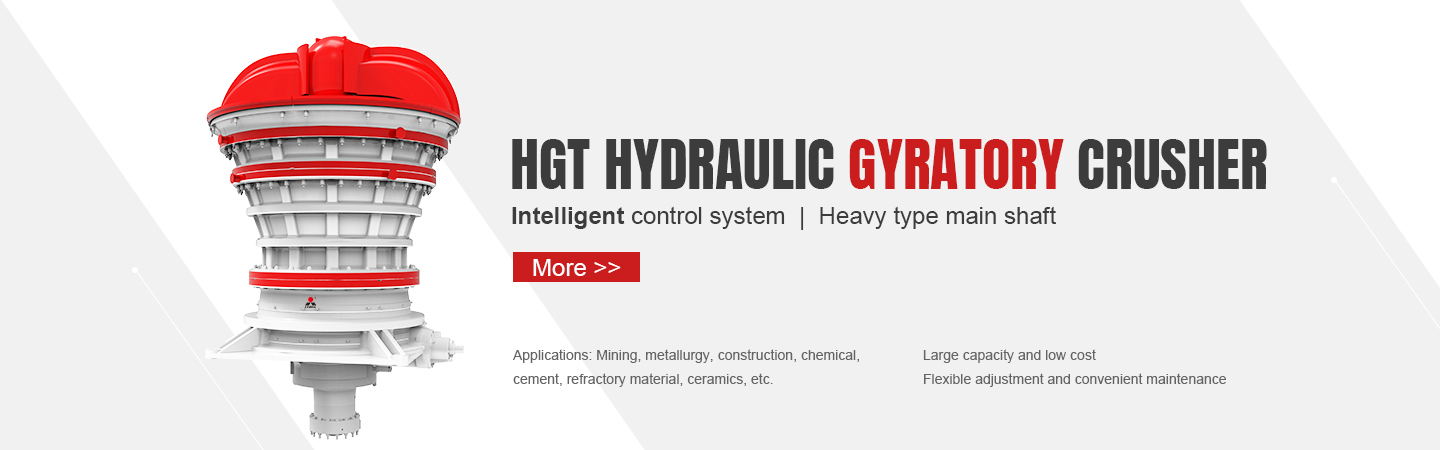
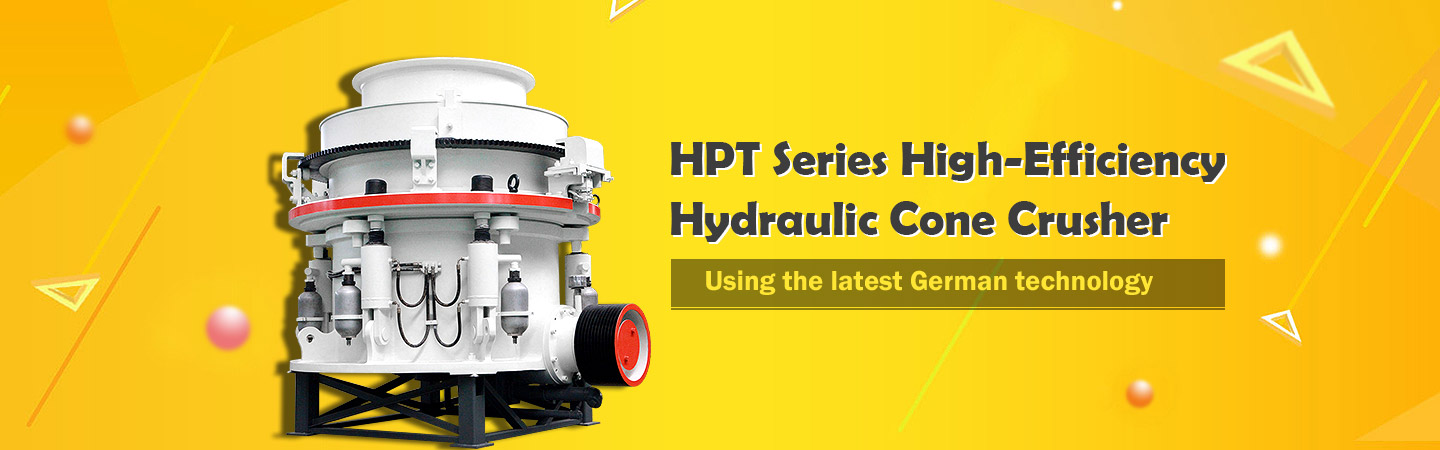
Malaysia is rich in granite and limestone. For hard-rock granite processing, Hydraulic Cone Crushers are the industry standard for the 500+ TPH tier.
- Secondary Stage: Single-cylinder hydraulic cone crushers offer high throughput and easy adjustment of discharge openings.
- Tertiary/Shaping Stage: Multi-cylinder cone crushers provide the “inter-particle crushing” effect necessary to ensure the cubic shape required for high-performance concrete (HPC).
3. Meeting the Sand Scarcity: VSI Technology
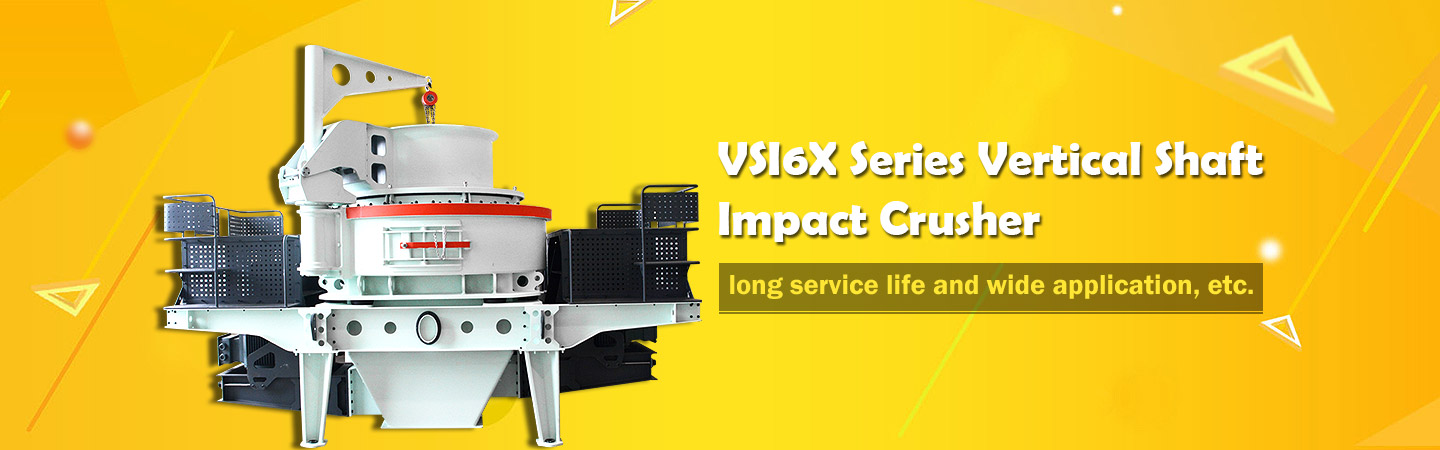
With natural river sand extraction being strictly regulated in many Malaysian states, manufactured sand (M-Sand) is the future. A 500+ TPH line typically integrates a VSI (Vertical Shaft Impact) Sand Maker.
- The Benefit: This unit performs high-speed “stone-on-stone” impact, producing fine 0-5mm sand with a consistent fineness modulus that exceeds the quality of natural sand.
4. Adapting to the Malaysian Climate: Washing & Recovery
Malaysia’s high rainfall and humidity mean that “dry” screening often isn’t enough. High-capacity lines are frequently equipped with:
- Wheel Sand Washers: To remove silt and ensure the cleanliness of the final aggregate.
- Fine Sand Recovery Systems: These units prevent the loss of valuable 0.16mm fines during the washing process, maximizing the overall plant yield and ensuring environmental compliance.
The Bottom Line
Engineering a 500+ TPH line in Malaysia is an investment in scalability and reliability. By combining robust primary jaw crushers, precision cone crushing technology, and efficient M-Sand production, operators can ensure they remain the preferred suppliers for the nation’s most ambitious construction projects.