
Table of Contents
- Understanding Small Mining Milling Machines and Their Industrial Role
- Types of Compact Milling Equipment for Small-Scale Mining Operations
- Key Features to Consider When Choosing a Small-Scale Milling Machine
- Applications of Small Mining Milling Machines in Gold, Silver, and Ore Processing
- Maintenance and Operational Efficiency Tips for Long-Term Performance
- Frequently Asked Questions
- What is a small mining milling machine used for?
- How does a small milling machine differ from industrial-scale mills?
- What types of small milling machines are most effective for hard rock mining?
- Can small milling machines achieve the same grind size as larger mills?
- What are the power requirements for operating a small mining milling machine?
- How do you maintain and troubleshoot a small milling machine?
- Are there portable small milling solutions for remote mining sites?
- What safety precautions are essential when operating a small milling machine?
- How do you select the right grinding media for a small mining mill?
- Can small milling machines be integrated into automated processing lines?
- What environmental considerations apply to small milling operations?
- How does mill liner material affect performance in small-scale applications?
In the evolving landscape of mineral extraction, efficiency and adaptability are paramount—especially for small-scale and artisanal mining operations where space, budget, and mobility are critical constraints. Enter the small mining milling machine: a compact yet powerful solution designed to deliver high-performance mineral processing without the footprint or overhead of traditional milling systems. These innovative machines combine advanced engineering with user-friendly design, enabling operators to pulverize, grind, and separate valuable minerals with remarkable precision and minimal waste. From hard rock ores to alluvial deposits, small milling machines offer scalable throughput and rapid setup, making them ideal for remote sites and pilot projects. As sustainability and operational agility gain prominence across the industry, these compact units are not just practical alternatives—they’re transformative tools driving smarter, more accessible mining practices worldwide.
Understanding Small Mining Milling Machines and Their Industrial Role
-
Small mining milling machines are engineered mechanical systems designed to reduce raw ore into finer particles to liberate valuable minerals for downstream processing. These compact units play a critical role in small-scale and artisanal mining operations, where space, capital, and energy constraints demand efficient, modular solutions.
-
Unlike large industrial mills, small milling machines prioritize mobility, ease of maintenance, and operational flexibility. They are commonly deployed in remote or geographically isolated regions where transporting bulk ore to centralized facilities is economically unfeasible. Their scalability allows integration into both standalone operations and pilot-scale processing circuits.
-
The primary types of small milling machines include ball mills, hammer mills, and rod mills, each suited to specific feed characteristics and desired product fineness. Ball mills utilize grinding media in a rotating cylinder to achieve particle size reduction and are ideal for fine grinding. Hammer mills employ high-speed impact for brittle materials, offering rapid throughput with moderate energy input. Rod mills, using long cylindrical rods, provide more uniform size distribution and are often used in gravity separation preparation.
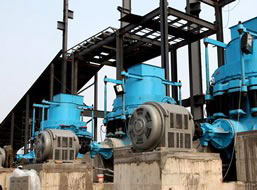
| Machine Type | Optimal Feed Size | Output Fineness | Energy Efficiency | Maintenance Complexity |
|---|---|---|---|---|
| Ball Mill | <25 mm | 20–200 µm | Moderate | Moderate |
| Hammer Mill | <50 mm | 0.5–10 mm | High | Low |
| Rod Mill | <15 mm | 50–500 µm | Moderate | High |
-
These machines are frequently paired with classifiers such as spirals or hydrocyclones to ensure product homogeneity and maximize mineral recovery. Advances in materials science have enhanced wear resistance in liners and grinding media, extending operational life and reducing downtime.
-
From a metallurgical perspective, the efficiency of small milling machines directly influences recovery rates in subsequent processes like flotation, leaching, or gravity concentration. Proper selection based on ore hardness, throughput requirements, and liberation size is essential to optimize overall circuit performance.
-
Increasingly, manufacturers are incorporating digital monitoring systems—such as vibration sensors and power draw analytics—into compact mills, enabling predictive maintenance and real-time performance tracking. This integration supports operational continuity and reduces unplanned outages.
-
In summary, small mining milling machines are indispensable tools in modern mineral processing, offering scalable, energy-conscious solutions that balance performance with logistical feasibility. Their industrial value lies not only in size but in enabling sustainable, economically viable extraction at reduced scales.
Types of Compact Milling Equipment for Small-Scale Mining Operations
-
Compact ball mills: These are tumbling mills that utilize steel balls as the grinding medium to reduce ore particle size through impact and attrition. Ideal for small-scale operations with feed sizes under 10 mm, compact ball mills offer reliable performance in closed or open circuit configurations. Their modular design allows integration with classifiers such as spiral or hydrocyclones for efficient size separation. Common in gold and base metal processing, they provide consistent product fineness with low maintenance demands when properly lined.
-
Hammer mills: Employing high-speed rotating hammers, these mills crush brittle materials through repeated impact. Suitable for soft to medium-hard ores, hammer mills are particularly effective in liberating minerals from gangue in artisanal and small-scale mining. Their simplicity in design facilitates ease of operation and maintenance, while adjustable screen sizes enable control over final product granularity. Dust suppression systems are recommended due to high particulate generation.
-
Disc pulverizers: Also known as two-roll or three-roll mills, these units apply compressive and shear forces between rotating discs or rolls to grind material. They excel in batch processing of sample quantities and are frequently used in laboratory settings scaled up for small production. With precise gap control, disc pulverizers achieve fine and uniform particle distribution, making them suitable for analytical preparation and gravity concentration feed conditioning.
-
Cone crushers (miniature): Though primarily a primary or secondary crushing device, scaled-down cone crushers serve as pre-grinding units in compact milling circuits. Their high reduction ratio and ability to handle abrasive feed make them valuable in hard rock applications. Modern compact models incorporate hydraulic adjustment and overload protection, enhancing operational safety and throughput efficiency.
-
Vibration mills: Utilizing high-frequency vibration of a grinding chamber containing media, these mills achieve fine grinding in minimal footprint. They are energy-efficient for fine and ultra-fine grinding applications, particularly where space is constrained. Vibration mills are often deployed in closed-loop systems for materials requiring micron-level particle size.
Each type addresses specific throughput, feed characteristics, and product size requirements. Selection depends on ore hardness, desired liberation size, power availability, and operational scalability. Integration with feeders, screens, and classifiers enhances overall circuit efficiency, ensuring optimal mineral recovery in limited-capacity environments.
Key Features to Consider When Choosing a Small-Scale Milling Machine
-
Machine Type and Configuration
Select between horizontal, vertical, or planetary ball mills based on the mineral’s grindability, desired particle size distribution, and throughput requirements. Horizontal mills offer consistent grinding for fine powders, while vertical designs save floor space and reduce energy per ton. Planetary mills provide high-energy impacts suitable for hard, abrasive ores but are typically limited to batch processing. -
Grinding Media Compatibility
Ensure the machine is compatible with various grinding media—ceramic, steel, or tungsten carbide—depending on the ore composition. Harder minerals may necessitate wear-resistant media and linings to extend component life and minimize contamination of the final product. -
Capacity and Scalability
Match the mill’s nominal capacity to daily processing needs, allowing for a 10–15% operational buffer. Small-scale units typically range from 5 to 50 kg per batch. Consider modular designs that allow future expansion or integration with additional units for increased throughput without replacing the entire system. -
Power Efficiency and Drive System
Evaluate the motor power relative to throughput and material hardness. Variable frequency drives (VFDs) enable precise control over rotational speed, optimizing energy consumption and grind consistency. High-efficiency motors reduce long-term operational costs, particularly in remote mining sites with limited power supply. -
Material of Construction and Wear Resistance
Mills processing abrasive ores require hardened steel, rubber-lined, or ceramic-lined chambers to resist wear. Seals and joints must prevent leakage and contamination, particularly in wet milling applications. -
Automation and Control Interface
Integrated digital controls allow monitoring of temperature, speed, and cycle duration, enhancing repeatability and safety. Programmable logic controllers (PLCs) support preset grinding profiles, reducing operator dependency and ensuring consistency across batches. -
Maintenance Accessibility and Downtime
Prioritize designs with quick-access hatches, modular components, and standardized replacement parts. Reduced maintenance time directly impacts operational availability, a critical factor in continuous processing environments. -
Safety and Environmental Compliance
Ensure built-in safety features such as emergency stops, interlocks, and dust collection interfaces. The machine should comply with relevant ISO and OSHA standards, particularly for noise levels and particulate containment, to meet site environmental and operational regulations.
Applications of Small Mining Milling Machines in Gold, Silver, and Ore Processing
-
Small mining milling machines have become integral to the efficient processing of gold, silver, and various ores, particularly in artisanal, small-scale, and remote mining operations where space, capital, and infrastructure are limited. These compact units deliver scalable throughput and high metallurgical recovery without the logistical burden of large-scale plants.
-
In gold processing, small milling machines—particularly ball mills, rod mills, and attrition mills—are employed to liberate fine gold particles from quartz veins and sulfide matrices. Their controlled grinding action ensures optimal particle size distribution for downstream gravity concentration or leaching. Units designed with variable speed drives allow operators to adjust grinding intensity based on ore hardness, enhancing gold recovery while minimizing overgrinding and reagent consumption in subsequent cyanidation.
-782347123401234789123478901234789012347890123478901234789012347890123478901234789012347890123478901234789012347890123478901234789012347890123478901234789012347890123478901234789012347890123478901234789012347890123478901234789012347890123478901234789012347890123478901234789012347890123478901234789012347890123478901234789012347890123478901234789012347890123480236″, “#W7820801”, “#W9898842”] have demonstrated recovery rates exceeding 90% when integrated with cyanidation or carbon-in-pulp systems.
-
For silver-bearing ores—often hosted in complex polymetallic matrices—precision grinding is critical due to the fine dissemination of argentiferous minerals such as argentite and tetrahedrite. Small milling machines with ceramic or stainless-steel linings minimize contamination and support selective grinding, enhancing silver recovery in flotation circuits. Their modular design allows for rapid deployment in high-altitude or ecologically sensitive regions where silver mining is prevalent.
-
In polymetallic and base metal ore processing, these units facilitate pre-concentration by enabling efficient size reduction ahead of sensor-based sorting or gravity separation. This reduces mass fed to downstream processes, lowering reagent consumption and energy expenditure.
| Application | Mill Type | Key Benefit |
|---|---|---|
| Gold Ores | Ball Mill | High liberation efficiency for refractory ores |
| Silver Ores | Attrition Mill | Fine grinding with minimal contamination |
| Polymetallic Ores | Rod Mill | Uniform particle size for sorting circuits |
- Reliability, low maintenance, and compatibility with solar or diesel power sources make small milling machines ideal for off-grid operations. When paired with automated feed controls and real-time monitoring, they deliver consistent performance essential for regulatory compliance and economic viability in small-scale mineral processing.
Maintenance and Operational Efficiency Tips for Long-Term Performance
-
Conduct daily visual inspections of all mechanical components, focusing on wear in liners, grinding media, and drive systems. Early identification of wear patterns prevents unplanned downtime and extends component service life.
-
Maintain consistent lubrication schedules using manufacturer-specified greases and oils. Over-lubrication can be as damaging as under-lubrication; adhere to volumetric and interval guidelines for bearings, gearboxes, and couplings.
-
Monitor motor load and power draw trends using onboard instrumentation or external data loggers. Sudden deviations may indicate feed inconsistencies, media depletion, or mechanical resistance requiring immediate investigation.
-
Implement a wear-part inventory management system to ensure critical spares—such as mill liners, lifter bars, and screen meshes—are available without overstocking. Prioritize OEM or certified aftermarket components to maintain performance integrity.
-
Optimize feed size and feed rate consistency through upstream crushing circuit control. Oversized feed increases energy consumption and accelerates wear; use scalping screens or pre-classification systems where applicable.
-
Perform periodic alignment checks on drive motors and couplings. Misalignment leads to vibration, seal damage, and premature bearing failure. Use laser alignment tools during scheduled maintenance intervals.
-
Calibrate slurry density and flow rate controls weekly, especially in wet grinding applications. Consistent slurry properties ensure efficient grinding kinetics and prevent overloading or settling in recirculation systems.
-
Clean and inspect cyclones, pumps, and hydrocyclone feed lines bi-weekly to prevent blockages and maintain classification efficiency. Erosion in cyclone vortex finders and apexes directly impacts particle size distribution.
-
Utilize vibration analysis and infrared thermography quarterly to detect subsurface bearing defects or electrical anomalies in motors and control panels before catastrophic failure occurs.
-
Train operators in standardized operating procedures, emphasizing the impact of abrupt start-stop cycles and improper shutdown sequences on mechanical stress. Document all operational deviations and corrective actions.
-
Schedule comprehensive preventive maintenance every 500 operating hours, including gearbox oil analysis, liner bolt torque verification, and electrical system inspection. Use findings to refine maintenance intervals based on actual machine utilization and ore characteristics.
-
Establish a digital maintenance log linked to machine runtime, linking component replacement dates with performance metrics. This enables predictive maintenance modeling and supports lifecycle cost analysis for future procurement decisions.
Frequently Asked Questions
What is a small mining milling machine used for?
A small mining milling machine is primarily used for reducing the size of mined materials such as ores, minerals, and rocks into finer particles for further processing. These compact systems are ideal for artisanal and small-scale mining operations, lab-scale testing, and pilot studies where space, power, and throughput requirements are limited. They enable efficient grinding and liberation of valuable minerals from host rock, facilitating downstream processes like flotation, leaching, or gravity separation.
How does a small milling machine differ from industrial-scale mills?
Small mining milling machines differ from industrial-scale mills in capacity, footprint, energy consumption, and automation. While industrial mills process hundreds of tons per hour, small milling machines typically handle a few kilograms to several tons per hour. They often feature modular designs, portability, and manual or semi-automated controls. Despite their size, they maintain critical engineering principles such as impact, attrition, and compression forces for effective particle reduction, making them suitable for remote or niche mining applications.
What types of small milling machines are most effective for hard rock mining?
For hard rock mining, small-scale ball mills and vertical stirred mills are most effective due to their high-energy grinding mechanisms. Ball mills utilize steel or ceramic media to crush and pulverize rock through impact and abrasion. Stirred mills, like the ZWC HIGmill or Xtrata Mill, use a rotating impeller with grinding media for ultra-fine grinding, increasing mineral liberation. These machines are particularly valuable in gold, tantalum, and lithium mining where fine grinding is essential for recovery optimization.
Can small milling machines achieve the same grind size as larger mills?
Yes, small milling machines can achieve comparable grind sizes—often down to P80 <20µm—when optimized with appropriate media size, retention time, and mill speed. However, they require precise control of parameters such as slurry density, feed size, and grinding media composition. High-efficiency models like laboratory-scale IsaMills or high-speed planetary ball mills are capable of replicating industrial grind performance, making them critical for metallurgical testwork and process development.
What are the power requirements for operating a small mining milling machine?
Power requirements for small mining milling machines typically range from 1 kW to 30 kW, depending on type, capacity, and material hardness. A small ball mill processing 500 kg/h of quartz may require 5–10 kW, while a high-intensity stirred mill could consume 15–25 kW for finer grinding. Energy efficiency can be improved with variable frequency drives (VFDs), optimized liner design, and closed-circuit classification systems, which are increasingly integrated into modern small-scale units.
How do you maintain and troubleshoot a small milling machine?
Effective maintenance includes regular inspection of liners, grinding media wear, motor coupling alignment, and seal integrity. Operators should monitor vibration, temperature, and power draw trends to detect issues like imbalance, media agglomeration, or bearing failure early. Common troubleshooting steps involve checking feed consistency, clearing blockages in classifiers, and adjusting slurry pH to prevent scaling. Preventive maintenance schedules based on operational hours maximize uptime and extend equipment life.
Are there portable small milling solutions for remote mining sites?
Yes, several vendors offer portable and containerized milling solutions designed for remote operations. These include skid-mounted ball mills, modular SAG mill systems, and containerized grinding plants equipped with cyclones and pumps. Units such as the 911MPE series are engineered for rapid deployment, minimal site preparation, and off-grid operation with diesel generators or solar-hybrid power. Their transportability makes them ideal for exploration projects, mobile leasing, and temporary mining concessions.
What safety precautions are essential when operating a small milling machine?
Critical safety measures include lockout-tagout (LOTO) procedures during maintenance, use of PPE (gloves, goggles, hearing protection), and isolation of moving parts with guards. Dust control via ventilation or wet grinding prevents silica exposure. Pressure and temperature monitoring systems mitigate the risk of explosions in closed-circuit mills, especially when processing sulfide ores. All operators should be trained in emergency shutdown protocols and hazard communication per MSHA or equivalent regulatory standards.
How do you select the right grinding media for a small mining mill?
Grinding media selection depends on ore hardness, desired grind size, and chemical compatibility. High-carbon steel or forged steel media are cost-effective for general use, while ceramic or high-chrome media offer longer life and lower contamination in precious metal applications. Media size (typically 10–50 mm diameter) must be matched to feed size—smaller media for fine grinding. Optimization is done through drop weight testing and media wear studies to balance efficiency and media consumption.
Can small milling machines be integrated into automated processing lines?
Yes, modern small milling machines can be integrated into automated processing lines using PLCs, sensors, and SCADA systems. Automation enables real-time control of feed rate, water addition, sump level, and particle size via online analyzers (e.g., Malvern laser diffraction). This integration improves consistency, reduces manual intervention, and supports data-driven decision making. Compact hydrocyclones and vibrating screens are often paired to form closed-loop circuits with feedback control, mimicking industrial-level process stability.
What environmental considerations apply to small milling operations?
Small milling operations must manage slurry containment, noise, dust, and chemical use. Closed-loop water recycling systems minimize discharge, while settling ponds or filter presses treat tailings. Dust from dry feed systems should be suppressed with spray nozzles or bag filters. Processing reagents (e.g., cyanide, flotation chemicals) require secure storage and spill containment. Compliance with local environmental regulations—such as ISO 14001 or equivalent—is essential, especially in ecologically sensitive or community-adjacent areas.
How does mill liner material affect performance in small-scale applications?
Mill liner material significantly influences wear life, grinding efficiency, and contamination. Manganese steel liners offer toughness for high-impact applications; rubber liners provide noise reduction and corrosion resistance with lower weight. Ceramic or polyurethane liners are ideal for fine grinding and corrosive slurries, reducing iron dilution in high-purity mineral products. Proper liner profile design also enhances lift and cascade action, improving grind kinetics and energy utilization in small mills.