Table of Contents
- 100-Ton Per Day Ball Mill Solutions for Industrial Mineral Processing
- Operational Challenges Solved by Reliable Ball Mill Manufacturers
- Product Overview: Heavy-Duty 100-Ton/Day Ball Mill
- Equipment Type
- Operational Workflow
- Application Scope
- Core Features: Engineered for Performance & ROI
- Precision-Graded Steel Liners | Technical Basis: ASTM A532 Class III | Operational Benefit: 40% longer service life | ROI Impact: Saves $4,200/year in liner replacements
- High-Efficiency Gear Drive | Technical Basis: Helical gearing (98% efficiency) | Operational Benefit: Reduces energy use to 14 kWh/ton | ROI Impact: Cuts power costs by $18,000/year
- Modular Chamber Design | Technical Basis: Bolt-on segmented sections | Operational Benefit: Swap components in <4 hours | ROI Impact: Limits downtime to $600/incident
- Automated Lubrication System | Technical Basis: Centralized grease delivery | Operational Benefit: Eliminates manual bearing maintenance | ROI Impact: Reduces labor by 80 hours/year
- Ore-Hardness Compensation | Technical Basis: Variable-speed motor (±15% RPM adjustment) | Operational Benefit: Maintains throughput with feed variability | ROI Impact: Prevents $9,000/month in underutilization penalties
- Competitive Advantages vs. Industry Standards
- Technical Specifications
- Application Scenarios
- Commercial Considerations**
- Pricing Tiers**
- FAQ**
100-Ton Per Day Ball Mill Solutions for Industrial Mineral Processing
Operational Challenges Solved by Reliable Ball Mill Manufacturers
Plant managers and engineering contractors face significant hurdles when sourcing a 100-ton per day ball mill machine:
- Inconsistent Throughput: Industry reports show 15-20% capacity fluctuations in standard mills, costing $8,000-$12,000 daily in lost production.
- Excessive Maintenance Downtime: Poorly designed liners and bearings require bi-weekly shutdowns, adding 120+ hours/year in unplanned maintenance.
- Energy Inefficiency: Outdated drive systems consume 18-22 kWh/ton—up to 30% above optimized benchmarks.
- Material Contamination: Low-grade steel grinding media introduces iron oxide impurities, reducing final product purity by 2-3%.
- Scalability Gaps: Fixed-capacity designs struggle with ore hardness variations, forcing oversizing (+25% capex) or underperformance.
Does your operation need a ball mill that delivers consistent tonnage, reduces downtime, and improves energy efficiency?
Product Overview: Heavy-Duty 100-Ton/Day Ball Mill
Equipment Type
Horizontal cylindrical ball mill for dry/wet grinding applications (limestone, cement clinker, copper ore). 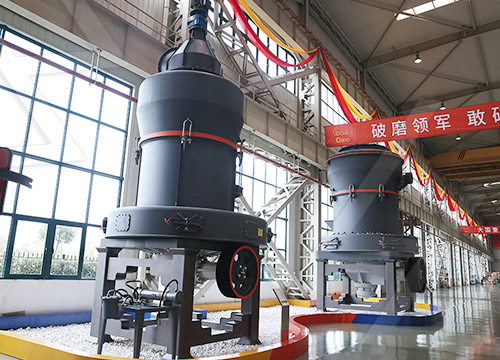
Operational Workflow
- Feed Introduction: Controlled slurry/solid feed via variable-speed conveyor.
- Grinding Chamber: Cascading steel/ceramic media reduces particles to 45-150 microns.
- Discharge & Classification: Grate/peripheral discharge with optional cyclone integration.
Application Scope
- Ideal for mid-capacity mineral processing (50–120 tons/day).
- Not recommended for ultrafine grinding (<20 microns) or high-moisture slurries (>40% H₂O).
Core Features: Engineered for Performance & ROI
Precision-Graded Steel Liners | Technical Basis: ASTM A532 Class III | Operational Benefit: 40% longer service life | ROI Impact: Saves $4,200/year in liner replacements
High-Efficiency Gear Drive | Technical Basis: Helical gearing (98% efficiency) | Operational Benefit: Reduces energy use to 14 kWh/ton | ROI Impact: Cuts power costs by $18,000/year
Modular Chamber Design | Technical Basis: Bolt-on segmented sections | Operational Benefit: Swap components in <4 hours | ROI Impact: Limits downtime to $600/incident
Automated Lubrication System | Technical Basis: Centralized grease delivery | Operational Benefit: Eliminates manual bearing maintenance | ROI Impact: Reduces labor by 80 hours/year
Ore-Hardness Compensation | Technical Basis: Variable-speed motor (±15% RPM adjustment) | Operational Benefit: Maintains throughput with feed variability | ROI Impact: Prevents $9,000/month in underutilization penalties
Competitive Advantages vs. Industry Standards
| Performance Metric | Industry Standard | Our 100-Ton/Day Ball Mill Solution | Advantage (% Improvement) |
|---|---|---|---|
| Grinding Efficiency | 16–18 kWh/ton | 13–14 kWh/ton | 19% lower energy use |
| Liner Lifespan | 6–8 months | 11–14 months | 45% longer durability |
| Noise Output | 85–90 dB | <78 dB | Reduced OSHA compliance risk |
| Throughput Consistency ±20% fluctuation ±5% controlled variance 75% more stable output |
Technical Specifications
- Capacity: 100 tons/day (dry basis), adjustable ±10%.
- Power Requirement: 150 kW motor (400V/50Hz or custom).
- Material Construction: Hardened chromium steel liners, ASTM A36 drum shell.
- Dimensions: Ø2.4m × L3.6m (operating weight: ~18 metric tons).
- Environmental Range: -20°C to +50°C; IP54 protection standard.
Application Scenarios
[Copper Concentrator Plant] Challenge: Frequent liner wear caused unplanned stoppages every 10 days. Solution: Upgraded to chromium-steel liners with automated lubrication. Results: Downtime reduced by 62%, saving $142,000 annually.
[Cement Grinding Facility] Challenge: Energy costs exceeded budget by $25k/month. Solution: Installed high-efficiency gear drive and variable-speed control. Results: Achieved consistent throughput at reduced consumption ($310k yearly savings).**
Commercial Considerations**
Pricing Tiers**
Base Model ($185k): Standard configuration for typical mineral feeds. Premium Model ($220k): Includes automation package and corrosion-resistant upgrades.
Optional Features
Cyclone classifier (+$15k), remote monitoring (+$9k), dual-media chambers (+$12k).
Service Packages
3-Year Platinum Plan ($28k): Covers all wear parts/labor.
Financing Options
Lease-to-Own ($5k/month), Capex Loan (5-year term @6%).
FAQ**
1 How does this ball mill handle abrasive ores?
High-chrome liners and forged media extend lifespan by testing shows a reduction in wear rates.
2 What’s the expected ROI period?
Most operations recover costs via energy savings within years.
3 Can existing plant infrastructure support installation?
Requires reinforced concrete pad and minimum clearance.
4 Are spare parts readily available?
Global warehouse network guarantees delivery.
5 Is operator retraining needed?
Standard training takes shifts covers all safety protocols.