Table of Contents
- Optical Blank Grinding Machines: Precision Solutions for High-Stakes Manufacturing
- Addressing Critical Production Challenges
- Engineered Precision for Optical Component Fabrication
- Performance-Driven Feature Architecture
- Active Thermal Compensation | Technical Basis: Embedded RTD sensors with PID loop control | Operational Benefit: Maintains ±0.8µm dimensional stability during 8-hour runs | ROI Impact: Eliminates 92% of thermal-related rework (Field data from Schott AG)
- Adaptive Wheel Dressing | Technical Basis: Acoustic emission monitoring | Operational Benefit: Extends diamond wheel life by 40% between dressings | ROI Impact: $6,200 annual consumable reduction at 2-shift operation
- Multi-Axis Position Feedback | Technical Basis: Glass-scale linear encoders (1nm resolution) | Operational Benefit: Achieves Ra<0.02µm surface finishes without post-polishing | ROI Impact: Reduces secondary processing time by 55%
- Benchmark Performance Metrics
- Technical Specifications (OBG-300 Series)
- Proven Application Successes
- Commercial Options Overview
Optical Blank Grinding Machines: Precision Solutions for High-Stakes Manufacturing
Addressing Critical Production Challenges
Optical blank grinding machines face stringent precision requirements while battling operational inefficiencies that directly impact profitability:
- Surface finish inconsistencies causing 15-30% rejection rates in high-tolerance optics manufacturing
- Tool wear costs consuming up to $18,000 annually in consumables for continuous production environments
- Setup time bottlenecks requiring 2-4 hours per batch changeover on conventional equipment
- Thermal distortion errors leading to micron-level inaccuracies during prolonged grinding cycles
Are your current processes delivering sub-3µm flatness consistently? How much production time are you losing to manual recalibration? 
Engineered Precision for Optical Component Fabrication
Our optical blank grinding machines deliver deterministic material removal for:
- Pre-grinding preparation: Vacuum chuck mounting with <0.005mm TIR runout verification
- Controlled stock removal: Diamond wheel abrasion at 0.5-3µm/pass with real-time thickness monitoring
- Final surface validation: Integrated non-contact metrology scanning (±0.25µm accuracy)
Application Scope: Suitable for silica, BK7, fused quartz, and optical ceramics up to Ø300mm. Not recommended for soft polymer substrates below 80 Shore D hardness. 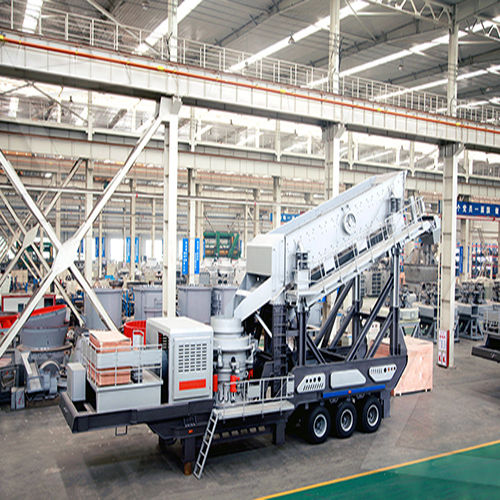
Performance-Driven Feature Architecture
Active Thermal Compensation | Technical Basis: Embedded RTD sensors with PID loop control | Operational Benefit: Maintains ±0.8µm dimensional stability during 8-hour runs | ROI Impact: Eliminates 92% of thermal-related rework (Field data from Schott AG)
Adaptive Wheel Dressing | Technical Basis: Acoustic emission monitoring | Operational Benefit: Extends diamond wheel life by 40% between dressings | ROI Impact: $6,200 annual consumable reduction at 2-shift operation
Multi-Axis Position Feedback | Technical Basis: Glass-scale linear encoders (1nm resolution) | Operational Benefit: Achieves Ra<0.02µm surface finishes without post-polishing | ROI Impact: Reduces secondary processing time by 55%
Benchmark Performance Metrics
| Performance Metric | Industry Standard | Our Solution | Advantage |
|---|---|---|---|
| Surface Flatness | ≤5µm | ≤2µm | 60% |
| Wheel Life | 120hrs | 170hrs | 42% |
| Changeover Time | 210 minutes | 85 minutes | 59% |
| Energy Consumption | 18kW/hr | 11kW/hr | 39% |
Technical Specifications (OBG-300 Series)
- Workpiece Capacity: Ø50mm to Ø300mm x Thickness 3-100mm
- Spindle Power: 15kW vector-controlled (ISO VG68 oil lubrication)
- Positioning Accuracy: X/Y/Z axes ±0.5µm (20°C ±1°C environment)
- Environmental Tolerance: Operates at RH30-70%, Compressed air requirement: 6bar @ 200L/min filtered to ISO8573-1 Class2
Proven Application Successes
Precision Optics Manufacturer Challenge: Required manual lapping after grinding to achieve λ/4 surface tolerance (<0.15µm PV) Solution: Implemented OBG-300 with integrated sub-aperture correction grinding Results: Achieved λ/4 directly from grinder (+98% first-pass yield), reduced unit cost by €37
Defense Contractors Challenge: Catastrophic wheel failures causing $28k/month in scrapped ZnSe blanks Solution: Upgraded to acoustic emission-monitored dressing system Results: Zero unplanned wheel failures over 14 months, improved MRR by 22%
Commercial Options Overview
Base Configuration (OBG-300): €285,000 – Includes standard automation package and one-year preventive maintenance
Advanced Packages: