
A toothed roll crusher can be used for quartz grinding, but it is primarily designed for crushing rather than fine grinding. Here’s how it works and considerations for quartz processing:
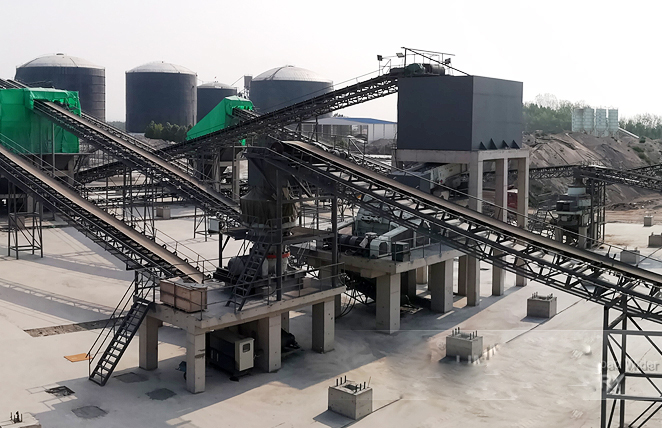 How a Toothed Roll Crusher Works
– Two rolls with intermeshing teeth rotate in opposite directions.
– Material (quartz) is fed between the rolls and crushed by shear, compression, and tearing forces.
– Output size depends on tooth spacing, roll speed, and gap settings.
.jpg) Suitability for Quartz Grinding
Suitability for Quartz Grinding
1. Coarse to Medium Crushing (Not Fine Grinding)
– Best for reducing quartz from large chunks (e.g., 50–100mm) to smaller particles (~5–20mm).
– Not ideal for producing fine powder (<1mm), which requires a ball mill, hammer mill, or Raymond mill.
2. Advantages
– High throughput with moderate energy consumption.
– Good for initial size reduction before fine grinding.
– Handles hard materials like quartz well due to the mechanical crushing action.
3. Limitations
– Generates dust; may require dust control systems.
– Teeth wear out over time (quartz is abrasive).
– Not suitable for ultra-fine grinding (micron-level).
Alternative Options for Fine Quartz Grinding
If your goal is fine powder:
– Ball Mill (wet/dry grinding to <100µm)
– Hammer Mill (medium-fine grinding)
– Raymond Mill / Vertical Roller Mill (for fine to ultra-fine powder)
Best Use of Toothed Roll Crusher in Quartz Processing
– As a primary or secondary crusher before further milling.
– For applications needing coarse to medium-sized quartz particles (e.g., glass production, ceramics).
Would you like recommendations based on your target particle size?