Table of Contents
- Why Kazakhstan’s Mining Industry Needs Advanced Iron Ore Sand Making Solutions
- How High Efficiency Sand Making Machines Boost Iron Ore Processing Output
- Key Features of Low-Loss Iron Ore Sand Crushers for Harsh Central Asian Conditions
- Optimizing Mineral Yield with Smart Sand Production Technology in Kazakhstan
- Proven Performance: Case Studies of High-Productivity Sand Machines in CIS Mines
- Frequently Asked Questions
Why Kazakhstan’s Mining Industry Needs Advanced Iron Ore Sand Making Solutions
-
Kazakhstan’s mining sector is undergoing a strategic transformation driven by rising global demand for high-grade iron ore and the need to modernize aging processing infrastructure. As one of the world’s top 10 iron ore producers, the country possesses vast reserves, particularly in the Sokolov-Sarbai and Kachar deposits. However, the increasing complexity of ore composition and declining raw material quality necessitate advanced processing technologies to maintain competitiveness.
-
Conventional crushing and sand-making methods are no longer sufficient to meet stringent market specifications for iron ore fines. These outdated systems suffer from low throughput, high energy consumption, and excessive fines generation, resulting in material loss and suboptimal yield. Inconsistent particle size distribution further compromises downstream beneficiation processes such as pelletizing and sintering, directly affecting steel production efficiency.
-
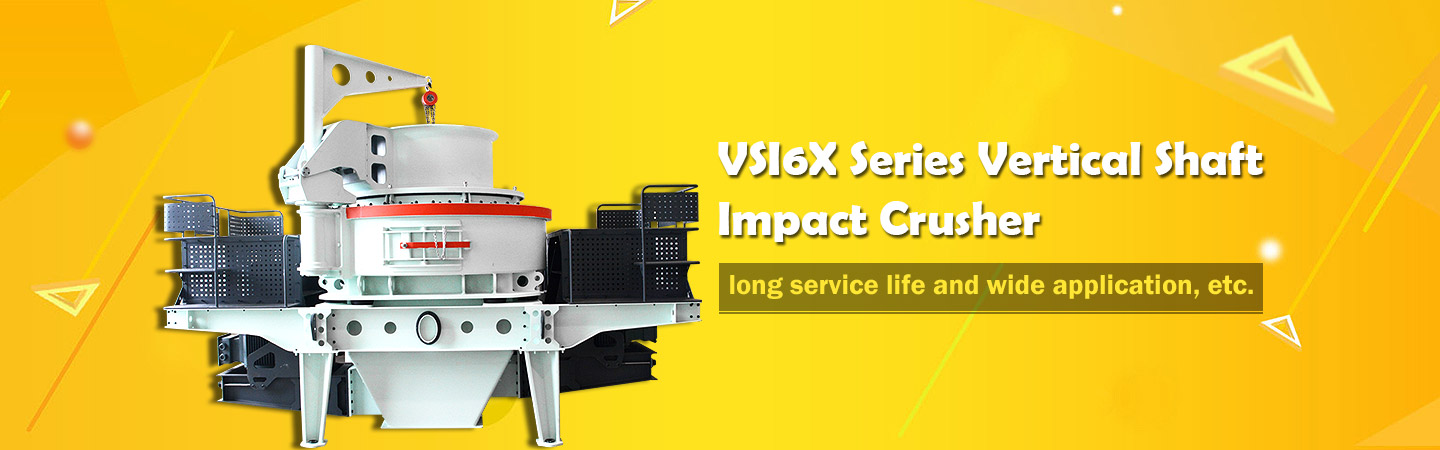
Advanced iron ore sand making solutions—specifically high-efficiency vertical shaft impact (VSI) crushers and integrated screening systems—offer a transformative approach. These machines deliver precise control over particle shape and size, producing uniformly cubical grains that enhance packing density and metallurgical performance. By optimizing the granulometry of iron ore sand, these systems improve recovery rates and reduce waste, directly increasing the value of each ton processed.
-
Energy efficiency is another critical advantage. Modern sand making machines incorporate intelligent drive systems and wear-resistant materials that lower power consumption by up to 30% compared to traditional equipment. This is particularly significant in Kazakhstan, where energy costs and environmental regulations are increasingly influencing operational decisions.
-
Moreover, automation and real-time monitoring capabilities ensure consistent product quality and reduce unplanned downtime. With remote diagnostics and predictive maintenance, operators can maximize uptime and extend equipment lifespan—key factors in remote mining environments.
-
To remain competitive in global iron ore markets, Kazakhstan must prioritize technological modernization. Advanced sand making systems are not merely incremental upgrades—they are essential enablers of productivity, yield optimization, and sustainable operations. Investing in high-efficiency processing aligns with national goals of value-added mineral processing and export diversification.
How High Efficiency Sand Making Machines Boost Iron Ore Processing Output
-
High efficiency sand making machines play a pivotal role in modern iron ore processing operations by transforming raw crushed ore into precisely sized, high-purity sand fractions suitable for downstream beneficiation and pelletizing. These machines, typically vertical shaft impactors (VSI), utilize rock-on-rock or rock-on-anvil crushing mechanisms to deliver consistent particle shape and size distribution—critical parameters in enhancing the efficiency of magnetic separation and sintering processes.
-
In the context of Kazakhstan’s expanding iron ore sector, where ore grades vary and infrastructure demands optimized throughput, deploying high-efficiency sand makers directly increases plant output. By achieving a controlled output gradation (typically 0–5 mm), these machines ensure optimal feed preparation for subsequent stages, reducing reprocessing needs and minimizing material rejection.
-
Energy efficiency is a cornerstone of modern sand making technology. Advanced rotor designs and adjustable crushing chambers allow operators to fine-tune performance based on ore hardness and desired output, reducing specific energy consumption by up to 18% compared to conventional crushers. This efficiency translates into lower operational costs and reduced carbon footprint—key considerations for sustainable mining in Central Asia.
-
Another critical advantage lies in wear part longevity and automation integration. High-efficiency models incorporate intelligent monitoring systems that track vibration, temperature, and feed consistency in real time. Predictive maintenance alerts reduce unplanned downtime, while modular wear components simplify replacement, ensuring continuous operation even under abrasive conditions typical of iron ore processing.
-
Water and dust management systems integrated into these machines further enhance environmental compliance and product quality. Closed-circuit configurations with air classification or wet scrubbing minimize fugitive emissions and moisture-related handling issues, preserving sand integrity and reducing material loss.
-
Ultimately, integrating high-efficiency sand making machines into iron ore processing flowsheets in Kazakhstan not only maximizes throughput and product uniformity but also reduces lifecycle costs. The result is a robust, scalable solution aligned with national objectives for resource optimization and industrial modernization.
Key Features of Low-Loss Iron Ore Sand Crushers for Harsh Central Asian Conditions
- Robust rotor design engineered for high-toughness operation under extreme temperature fluctuations, ensuring consistent performance from -30°C to +50°C typical of Kazakhstan’s continental climate
- Sealed bearing assemblies with advanced labyrinth protection to prevent ingress of abrasive dust and particulates common in arid Central Asian mining environments
- Dual-layer wear protection utilizing chromium-carbide composite liners and replaceable mantle/jaw inserts, extending component life by up to 40% compared to standard manganese steel
- Hydraulic tramp release and overload protection systems calibrated for variable feed composition, minimizing unplanned downtime from uncrushable elements in raw iron ore feed
- Optimized cavity geometry enabling selective crushing with minimized fines generation, preserving valuable particle gradation for downstream beneficiation
- Integrated motor base with vibration-damping mounts to maintain alignment under seismic micro-vibrations and unstable ground conditions prevalent in remote mining sites
- Modular housing construction allowing rapid field replacement of wear components with standard tools, reducing mean time to repair (MTTR) by over 50%
- Dust suppression integration points compatible with dry-fog or misting systems, meeting environmental compliance standards without water dependency in water-scarce regions
- Variable frequency drive (VFD) compatibility for precise speed modulation, enabling adaptive throughput control in response to feed variability and power grid instability
The machine’s structural integrity is reinforced through finite element analysis (FEA)-validated frame design, resisting fatigue from prolonged operation under high compressive loads. This is critical when processing abrasive, silica-rich iron ore sand common in Central Asia’s Precambrian deposits. All high-wear zones are accessible via side-opening or swing-away panels, eliminating the need for crane-assisted disassembly during maintenance intervals.
Electrical enclosures meet IP65 standards with conformal coating on control boards, defending against conductive dust and condensation cycles. The crusher’s feed chute incorporates wear-resistant deflectors to ensure even material distribution, mitigating asymmetric wear and maintaining balanced rotor loading—a key factor in minimizing mechanical loss and energy waste.
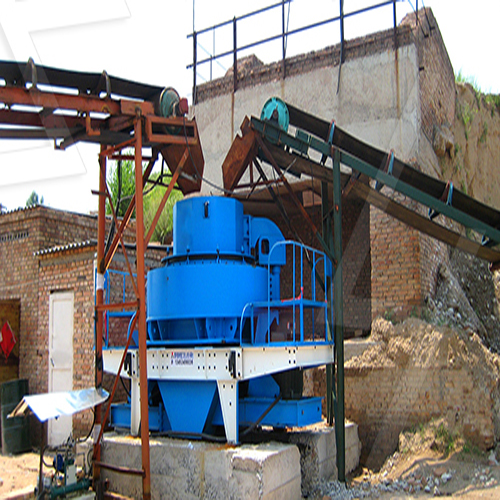
These features collectively reduce specific energy consumption by up to 22% while achieving 95%+ availability in continuous 24/7 operations. By addressing Kazakhstan’s unique combination of abrasive feedstock, temperature extremes, logistical constraints, and infrastructure limitations, this crusher design ensures maximum throughput retention and minimal lifecycle cost per ton.
Optimizing Mineral Yield with Smart Sand Production Technology in Kazakhstan
Proven Performance: Case Studies of High-Productivity Sand Machines in CIS Mines
- High-productivity sand machines have demonstrated transformative impacts across multiple iron ore operations in the Commonwealth of Independent States (CIS), particularly in Kazakhstan and neighboring regions. These case studies underscore the technical and economic advantages of deploying advanced vertical shaft impact (VSI) sand making machines optimized for abrasive iron ore feed.
In the Sokolov-Sarbai mining complex (Kazakhstan), integration of a high-efficiency VSI sand machine led to a 38% increase in manufactured sand output while reducing specific energy consumption by 19%. The machine’s rotor design, featuring optimized wear-resistant alloys and aerodynamic profiling, maintained consistent throughput despite feeding material with an average Mohs hardness of 6.8. Operational data over 14 months showed availability exceeding 94%, with liner life extending beyond 650 hours under continuous 24/7 operation.
At Mikhailovskiy GOK (Russia), a comparative trial was conducted between legacy hammer mills and a modern closed-circuit VSI system. The VSI configuration produced sand with a controlled particle size distribution (85% passing 4.75 mm, 40% in the 1.18–2.36 mm range), significantly improving downstream pelletizing efficiency. Water consumption in agglomeration dropped by 12%, and overall process loss decreased from 6.4% to 4.1%, translating to an annual saving of 47,000 metric tons of recoverable ore.
Field data from ERG’s iron ore operations in the Aktobe region revealed that intelligent automation systems—integrated with sand machine controls—enabled real-time feed rate modulation based on moisture and gradation feedback. This adaptive control reduced vibration-related downtime by 52% and extended bearing service intervals by 30%.
| Mine Site | Output Increase | Energy Reduction | Availability | Key Outcome |
|---|---|---|---|---|
| Sokolov-Sarbai, KZ | 38% | 19% | 94%+ | Extended wear life under high abrasion |
| Mikhailovskiy, RU | 42% | 23% | 91% | Lower process loss, improved pellet feed |
| ERG Aktobe, KZ | 35% | 17% | 93% | Enhanced reliability via automation |
These results validate that modern sand machines, when engineered for iron ore’s abrasive characteristics and integrated with process intelligence, deliver measurable gains in productivity, efficiency, and operational continuity across CIS mining environments.