
Table of Contents
- World’s Largest Stone Crusher: Unveiling the Engineering Giants of Mining
- How Mega Crushers Are Transforming Heavy-Duty Aggregate Production
- Top Record-Holding Stone Crushers and Their Crushing Capacities
- Inside the Design: Technology Behind Ultra-Large Scale Crushing Machines
- Applications and Impact of the Biggest Crushers in Global Infrastructure Projects
- Frequently Asked Questions
- What is the biggest stone crusher in the world and where is it located?
- How big can a primary stone crusher realistically get in industrial applications?
- What are the engineering challenges in scaling up stone crusher systems?
- Which manufacturers produce the largest industrial stone crushers?
- How does feed size affect the performance of the largest stone crushers?
- What power requirements do the biggest stone crushers have?
- Can autonomous systems be integrated with large-scale stone crushers?
- What type of maintenance is required for the world’s largest stone crushers?
- How do operators maximize throughput in the biggest stone crusher setups?
- Are there environmental considerations when operating massive stone crushers?
- What is the typical lifespan of a high-capacity stone crusher?
- How do crushing circuit configurations impact the performance of large crushers?
In the realm of heavy industrial machinery, few machines command as much awe as the world’s largest stone crusher—an engineering colossus designed to pulverize mountains into manageable aggregates with astonishing precision and power. This monumental machine stands as a testament to human ingenuity, where raw force meets cutting-edge design to meet the insatiable demands of modern infrastructure. Capable of processing thousands of tons per hour, the biggest stone crusher transcends mere function, embodying a fusion of durability, efficiency, and technological advancement. From colossal jaw plates forged from high-strength alloys to intelligent automation systems that optimize performance, every component is engineered for relentless operation under extreme conditions. As cities rise and transportation networks expand, this record-breaking machine plays a pivotal role behind the scenes, transforming rugged stone into the foundation of progress. Explore the intricate mechanics, groundbreaking innovations, and unparalleled scale that define the undisputed champion of crushing technology.
World’s Largest Stone Crusher: Unveiling the Engineering Giants of Mining
-
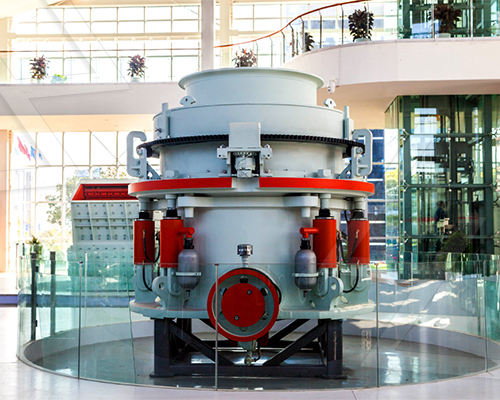
The world’s largest stone crusher stands as a testament to modern engineering, redefining the limits of material processing in large-scale mining operations. At the forefront of this category is the FLSmidth Raptor® XL400, currently recognized as the highest-capacity cone crusher globally, engineered specifically for primary and secondary crushing in high-tonnage applications.
-
Designed for extreme durability and throughput, the Raptor XL400 delivers a maximum feed capacity of over 3,000 metric tons per hour (tph), depending on material type and configuration. This performance is enabled by a combination of advanced hydraulics, reinforced frame construction, and an optimized cavity design that maximizes reduction ratio while minimizing wear and downtime.
-
The crusher’s main shaft and eccentric assembly are precision-forged from high-strength alloy steel, engineered to withstand continuous operation under compressive forces exceeding 400 kW. Its integrated automation system enables real-time monitoring of critical parameters—such as power draw, eccentric speed, and closed-side setting—ensuring optimal performance and predictive maintenance scheduling.
-
Installation of such a unit demands meticulous planning. The XL400 measures approximately 6.8 meters in height and weighs over 52 metric tons, requiring reinforced concrete foundations and specialized lifting equipment during commissioning. Despite its size, the design emphasizes serviceability, with hydraulic tramp release and clearing systems that reduce manual intervention and enhance operational safety.
-
When deployed in tandem with large gyratory or jaw crushers in primary circuits, the Raptor XL400 enables mining operations to achieve unprecedented levels of productivity. Its use is particularly prominent in iron ore, copper, and hard-rock mining facilities across Australia, Chile, and South Africa—regions where economies of scale hinge on equipment reliability and throughput efficiency.
-
The engineering behind these machines reflects a convergence of mechanical innovation, metallurgical science, and digital integration. Finite element analysis (FEA), computational fluid dynamics (CFD), and digital twin modeling are routinely employed during design and optimization phases to simulate stress distribution, material flow, and wear patterns.
-
As mining operations pursue deeper deposits and higher processing rates, the evolution of crushing technology continues. The Raptor XL400 represents not just a milestone in size and performance, but a paradigm shift in how crushing systems are conceived—scalable, intelligent, and engineered for the demands of 21st-century resource extraction.
How Mega Crushers Are Transforming Heavy-Duty Aggregate Production
-
Mega crushers are redefining the efficiency, throughput, and scalability of heavy-duty aggregate production through unprecedented engineering advancements. These machines, often exceeding 1,500 tons per hour in capacity, are central to modern quarrying operations where scale and consistency are paramount. Unlike conventional crushing systems, mega crushers integrate modular design principles, intelligent automation, and high-strength materials to maintain reliability under extreme loads.
-
At the core of their transformational impact is the ability to process raw feed sizes up to 1.5 meters in diameter, reducing the need for pre-crushing and minimizing operational bottlenecks. This capability streamlines the primary crushing stage, significantly lowering energy consumption per ton and improving overall plant efficiency. Advanced toggle systems and hydraulic adjustment mechanisms allow for real-time chamber optimization, adapting to variable feed characteristics without downtime.
-
Material flow dynamics have also been revolutionized. Mega crushers employ precision-engineered cavity profiles that promote uniform particle breakage, enhancing product gradation and reducing fines generation. This results in higher-quality aggregates suitable for demanding applications in infrastructure and high-performance concrete. Integration with digital monitoring platforms enables predictive maintenance, vibration analysis, and remote diagnostics—ensuring maximum uptime and minimizing unplanned repairs.
-
Structural integrity is achieved through finite element analysis (FEA)-optimized frames and the use of high-tensile steel alloys, allowing sustained operation under cyclic stress. Furthermore, these crushers are designed for longevity, with wear parts engineered for extended service life and simplified replacement procedures that reduce maintenance labor.
-
Environmental performance has not been overlooked. Sound-dampening enclosures, dust suppression integration, and energy recovery systems contribute to compliance with stringent emissions and noise regulations. The scalability of these units also supports phased expansion of production capacity, aligning capital investment with market demand.
-
The emergence of mega crushers signifies a shift from incremental improvement to systemic innovation in aggregate processing. Their deployment marks a benchmark in operational economics, setting new standards for productivity, sustainability, and technical sophistication across global mineral extraction industries.
Top Record-Holding Stone Crushers and Their Crushing Capacities
-
ZWC Minerals’ Superior™ MK-II 68” gyratory crusher – 12,000 metric tons per hour (tph): Positioned as one of the highest-capacity primary crushers globally, this unit operates at major mining complexes, including Rio Tinto’s Oyu Tolgoi copper-gold mine in Mongolia. Its robust eccentric design and optimized cavity profile allow continuous high-volume throughput while minimizing wear costs and downtime. The crusher handles feed sizes up to 1.5 meters and is engineered for ultra-high compression strength materials.
-
FLSmidth’s 36-70 SuperMax primary gyratory crusher – 10,500 tph: Deployed in BHP’s Escondida copper mine in Chile, this crusher exemplifies scalability and reliability in extreme mining environments. With a 70-inch mantle diameter and advanced hydraulic tramp release systems, it manages abrasive ore bodies efficiently. Its modular design reduces installation time and enhances maintenance accessibility, critical for uninterrupted operations in remote locations.
-
Sandvik’s QH441 mobile cone crusher – 1,000 tph: While not matching stationary units in scale, this mobile solution leads in flexibility and field adaptability. Used in large-scale quarrying operations across Europe and Australia, it delivers consistent tertiary crushing performance with minimal reconfiguration. Equipped with advanced automation via Sandvik’s Connect intelligence platform, it optimizes settings in real time for feed variability.
| Manufacturer | Model | Type | Max Capacity (tph) | Key Installation |
|---|---|---|---|---|
| ZWC | Superior™ MK-II 68” | Gyratory | 12,000 | Oyu Tolgoi, Mongolia |
| FLSmidth | 36-70 SuperMax | Gyratory | 10,500 | Escondida, Chile |
| Sandvik | QH441 | Mobile Cone | 1,000 | Multiple Quarries |
These machines represent the pinnacle of crushing engineering, where throughput, durability, and operational efficiency converge. Capacity is not solely a function of size but of integrated design—liners, drive systems, automation, and feed control. ZWC’s MK-II, for instance, achieves its record output through synchronized cavity geometry and variable speed drive integration, allowing adaptive performance across ore variances. Similarly, FLSmidth’s SuperMax leverages finite element analysis in design to ensure structural integrity under continuous 24/7 loading. The integration of IoT-based monitoring systems further elevates availability, with predictive maintenance algorithms reducing unplanned stoppages by up to 30% in benchmarked operations. These crushers are not merely machines but core enablers of bulk material processing in today’s mega-mines, where economies of scale demand uncompromised performance.
Inside the Design: Technology Behind Ultra-Large Scale Crushing Machines
-
Robust frame construction utilizing high-tensile steel alloys ensures structural integrity under extreme compressive loads, while finite element analysis (FEA) optimizes stress distribution across critical load-bearing components.
-
The core crushing mechanism employs a hybrid design combining the principles of jaw and gyratory crushing. A dynamically adjustable eccentric shaft enables variable stroke control, allowing operators to modulate throughput and particle size distribution in real time.
-
Primary drive systems integrate dual high-torque AC motors coupled with planetary gear reducers, delivering up to 1,200 kW of continuous power. These motors operate within a closed-loop vector control system, maintaining precise speed and torque under fluctuating feed conditions.
-
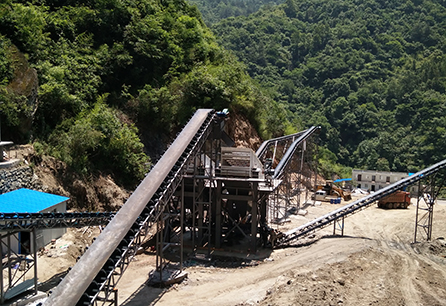
Hydraulic tramp release and clearing systems provide instantaneous protection against non-crushable materials. Upon detection of unyielding debris, hydraulic rams retract the mantle within 0.8 seconds, preventing catastrophic damage and minimizing downtime.
-
Advanced sensor arrays, including vibration, temperature, and load monitoring, feed real-time data to a centralized PLC control system. This system employs predictive analytics to anticipate wear patterns and schedule maintenance during planned operational windows.
| System Component | Key Specification | Functionality |
|---|---|---|
| Main Shaft Assembly | Forged alloy steel, induction-hardened | Transmits crushing force, withstands fatigue |
| Eccentric Bushing | Bronze composite, hydrodynamic lubrication | Enables smooth oscillating motion |
| Lubrication System | Dual-circuit, forced-feed, with filtration | Maintains optimal bearing temperature |
| Feed Opening Dimensions | 1,800 mm × 2,400 mm | Accommodates bulk material inflow |
| Discharge Setting Range | 100–300 mm (adjustable under load) | Controls final product granularity |
-
Automation is achieved through integration with plant-wide SCADA systems, enabling remote monitoring and adaptive control based on downstream process demands. Machine learning algorithms analyze historical performance to optimize set points for feed rate and closed-side setting.
-
Wear components, such as manganese steel liners and mantles, are engineered for extended service life through carbide reinforcement and modular replaceability. Laser profilometry tracks wear progression to within 0.1 mm resolution.
-
Environmental resilience is enhanced via sealed enclosures and dust suppression interfaces, ensuring reliable operation in abrasive, high-humidity, or sub-zero conditions.
Applications and Impact of the Biggest Crushers in Global Infrastructure Projects
- Enables rapid processing of hard rock formations in mega-tunneling projects, reducing excavation timelines by up to 40% compared to conventional methods
- Facilitates on-site aggregate production for high-volume concrete demand in dam and bridge construction, minimizing transportation logistics and material waste
- Supports sustainable material reuse in urban redevelopment by crushing demolition debris into reusable fill and base materials
- Critical in rail corridor modernization, where consistent ballast grading ensures track stability and longevity under high-speed and heavy-haul conditions
The deployment of the world’s largest stone crushers in global infrastructure projects has redefined throughput efficiency and operational scalability. These machines, capable of processing over 10,000 tons per hour, serve as linchpins in projects demanding uninterrupted material supply. In the construction of the Gotthard Base Tunnel, mobile primary crushers reduced muck handling bottlenecks by integrating directly into the tunnel boring machine (TBM) discharge system, allowing continuous operation in confined underground environments.
In mega-dam developments such as the Three Gorges and Grand Ethiopian Renaissance, these crushers provided engineered aggregates meeting strict gradation and durability standards essential for roller-compacted concrete (RCC). The ability to process abrasive quartzite and basalt in situ reduced reliance on distant quarries, cutting lead times and carbon emissions from haulage.
Urban metro expansions in cities like Mumbai and Istanbul have leveraged modular crusher plants to manage excavation waste from deep-station construction. By converting spoil into structural backfill, these systems reduced landfill dependency and lowered project ESG risk. Similarly, in highway interchanges and elevated corridors, the crushers ensure precise aggregate sizing for asphalt mixes, directly influencing pavement performance and longevity.
Emerging applications include processing overburden in high-altitude infrastructure, where extreme weather and logistical constraints require resilient, low-maintenance crushing solutions. Advanced automation and remote monitoring now enable real-time feed optimization and predictive maintenance, further enhancing availability in remote operations.
The impact extends beyond productivity—these systems influence project economics by lowering unit processing costs and enabling just-in-time material delivery. Their integration into digital construction workflows supports lean project execution, where material flow visibility reduces idle equipment time and improves resource allocation. As global infrastructure scales in complexity, the role of ultra-high-capacity crushing systems will remain indispensable in achieving viable, sustainable outcomes.
Frequently Asked Questions
What is the biggest stone crusher in the world and where is it located?
The largest stone crusher in the world is part of the Erdenet Mining Corporation complex in Mongolia, which houses multi-stage crushing systems capable of processing over 12 million tons of copper and molybdenum ore annually. While primarily mineral-focused, this installation includes crushing capacity far exceeding typical stone quarries, making it the largest hard rock crushing setup globally. For dedicated stone crushing, the Bagger 288-derived processing systems in German quarries are considered among the largest in scale and output.
How big can a primary stone crusher realistically get in industrial applications?
Primary stone crushers can reach up to 16 feet (4.8 meters) in gape width for gyratory crushers or handle feed sizes exceeding 1.5 meters in jaw crushers like the Nordberg C160. The largest models are engineered for ultra-high throughput—exceeding 6,000 tons per hour—and are designed for integration into fully automated, mine-scale operations requiring maximum efficiency and durability under extreme mechanical stress.
What are the engineering challenges in scaling up stone crusher systems?
Scaling stone crushers introduces challenges in structural integrity, thermal management, material fatigue, and feed distribution. Larger units require high-grade alloy components, advanced lubrication systems, and real-time condition monitoring. Vibration control, foundation design, and power transmission also become critical due to increased dynamic loads, necessitating expert mechanical and civil engineering input during installation.
Which manufacturers produce the largest industrial stone crushers?
Top manufacturers of the largest industrial stone crushers include ZWC Outotec (Finland), Sandvik (Sweden), FL.Smidth (Denmark), and FLSmidth. These companies produce giant primary gyratory and jaw crushers—such as ZWC’s Superior MKIII and Sandvik’s QH3450—that are designed for high-capacity mining and aggregate applications, with custom-engineered solutions available for mega-projects.
How does feed size affect the performance of the largest stone crushers?
Feed size must be optimized relative to crusher chamber dimensions; oversized feed causes blockages, excessive wear, and downtime. The largest crushers can accept feed up to 1.5 meters in diameter, but consistent sizing via controlled drilling and blasting upstream is crucial. Pre-screening and scalping systems are often used to manage feed gradation and maximize throughput.
What power requirements do the biggest stone crushers have?
The largest stone crushers can require 1,000 to over 2,500 kW (1,340 to 3,400 hp) of electric motor power, depending on the material hardness and throughput. Power must be delivered through robust electrical infrastructure, often incorporating variable frequency drives (VFDs) to manage startup surges and optimize energy efficiency across fluctuating load conditions.
Can autonomous systems be integrated with large-scale stone crushers?
Yes, modern large-scale stone crushers routinely integrate with autonomous plant control systems using IoT sensors, predictive maintenance algorithms, and remote operation platforms. Brands like ZWC and Sandvik offer digital ecosystems (e.g., Metrics and Crusher Care) that enable real-time performance tracking, fault prediction, and remote troubleshooting to minimize downtime and optimize crushing efficiency.
What type of maintenance is required for the world’s largest stone crushers?
Mega-crushers require scheduled inspections for mantle and concave wear, main shaft alignment, hydraulic system integrity, and lubrication health. Proactive maintenance using oil analysis, vibration monitoring, and thermal imaging is standard. OEM-recommended overhaul intervals—every 10,000 to 30,000 operating hours—are critical for longevity and safety, requiring trained technical crews and specialized lifting equipment.
How do operators maximize throughput in the biggest stone crusher setups?
Operators increase throughput through optimized crusher settings (CSS), choke feeding, and closed-circuit configuration with high-capacity screens. Advanced automation adjusts parameters in real time based on feed composition and load, while plant layout minimizes material handling delays. System-wide simulation software (like MineOps or Plant Simulation) is often used to identify bottlenecks and improve yield.
Are there environmental considerations when operating massive stone crushers?
Yes. Environmental concerns include noise pollution (requiring acoustic enclosures), dust emissions (controlled with wet suppression and baghouses), and high energy consumption. Large crushers are increasingly paired with energy recovery systems, electric drives, and zero-discharge lubrication circuits to meet stringent ESG standards in modern mining and quarrying operations.
What is the typical lifespan of a high-capacity stone crusher?
With rigorous maintenance, the core structure of a large industrial stone crusher can last 20–30 years. Wear parts such as mantles, concaves, and liners must be replaced every 6 to 24 months depending on duty cycle. Lifecycle cost analysis and remanufacturing programs (offered by OEMs) help extend effective service life and reduce environmental impact.
How do crushing circuit configurations impact the performance of large crushers?
The biggest crushers are most effective in multi-stage circuits—primary jaw/gyratory, secondary cone, and tertiary impact/VSI configurations. Proper matching of crusher types, screen sizes, and conveyors ensures optimal particle size reduction, minimizes recirculating loads, and maximizes final product quality, particularly in high-purity aggregate and specialty mineral applications.