
Table of Contents
- Decortication Method Through Hammer Mill Technique: Optimizing Fiber Separation Efficiency
- Operational Challenges in Traditional Decortication
- Product Overview: Hammer Mill Decortication Systems
- Core Features of Hammer Mill Decortication
- Adjustable Impact Velocity | Technical Basis: Variable frequency drive control | Operational Benefit: Reduces fiber damage by 40% vs fixed-speed systems | ROI Impact: Saves $6/ton in premium fiber loss
- Hard-Faced Hammers | Technical Basis: Tungsten carbide overlay (HRC 58-62) | Operational Benefit: Extends wear life to 800+ operating hours | ROI Impact: Lowers replacement costs by $2,100/year
- Dual Airflow Separation | Technical Basis: Counter-current aspiration channels | Operational Benefit: Achieves 98% purity at 12 tons/hour throughput | ROI Impact: Eliminates $85/ton secondary cleaning costs
- Vibration Monitoring System | Technical Basis: IoT-enabled accelerometers | Operational Benefit: Predicts bearing failures with 92% accuracy | ROI Impact: Reduces unplanned downtime by 30% annually
- Modular Screen Design | Technical Basis: Quick-release clamping mechanism | Operational Benefit: Enables material changeovers in <15 minutes | ROI Impact: Increases utilization rate by 22% in multi-crop facilities
- Competitive Advantages Comparison Table
- Technical Specifications
- Application Scenarios
- Commercial Considerations
- FAQ
Decortication Method Through Hammer Mill Technique: Optimizing Fiber Separation Efficiency
Operational Challenges in Traditional Decortication
- Fiber Damage Rates: Conventional methods show 12-18% fiber breakage, reducing marketable yield by $8-$12 per ton processed.
- Throughput Limitations: Manual decortication processes average 2-3 tons/hour versus hammer mill systems at 8-12 tons/hour.
- Maintenance Costs: Chain conveyors and blade systems require weekly servicing, costing $3,200 annually in downtime and parts.
- Inconsistent Separation: Field tests reveal ±15% variation in fiber-to-husk ratios with manual methods versus ±5% with hammer mill decortication.
- Energy Inefficiency: Older systems consume 22-28 kWh/ton compared to modern hammer mills at 14-18 kWh/ton.
How does your operation currently mitigate these losses—and what would a 20% improvement in fiber recovery mean for your bottom line?
Product Overview: Hammer Mill Decortication Systems
Equipment Type: Heavy-duty rotor-based hammer mills with integrated separation screens (2mm–10mm configurations).
Operational Workflow:
- Raw material pre-cleaning (debris removal)
- Controlled feed into hammer mill chamber (regulated by load sensors)
- Impact-based fiber separation through adjustable hammer velocity (18-32 m/s)
- Dual-stage air classification for husk removal
- Output grading via vibrating screens
Applications: Sisal, hemp, jute processing | Limitations: Not recommended for moisture content >18% or materials with <0.8mm fiber diameter.
Core Features of Hammer Mill Decortication
Adjustable Impact Velocity | Technical Basis: Variable frequency drive control | Operational Benefit: Reduces fiber damage by 40% vs fixed-speed systems | ROI Impact: Saves $6/ton in premium fiber loss
Hard-Faced Hammers | Technical Basis: Tungsten carbide overlay (HRC 58-62) | Operational Benefit: Extends wear life to 800+ operating hours | ROI Impact: Lowers replacement costs by $2,100/year
Dual Airflow Separation | Technical Basis: Counter-current aspiration channels | Operational Benefit: Achieves 98% purity at 12 tons/hour throughput | ROI Impact: Eliminates $85/ton secondary cleaning costs
Vibration Monitoring System | Technical Basis: IoT-enabled accelerometers | Operational Benefit: Predicts bearing failures with 92% accuracy | ROI Impact: Reduces unplanned downtime by 30% annually
Modular Screen Design | Technical Basis: Quick-release clamping mechanism | Operational Benefit: Enables material changeovers in <15 minutes | ROI Impact: Increases utilization rate by 22% in multi-crop facilities
Competitive Advantages Comparison Table
| Performance Metric | Industry Standard | Hammer Mill Solution | Advantage (%) |
|---|---|---|---|
| Fiber Recovery Rate | 78-82% | 89-93% | +13% |
| Energy Consumption | 22 kWh/ton | 16 kWh/ton | -27% |
| Maintenance Interval | Every 120 hours | Every 350 hours | +192% |
| Throughput Consistency ±15% deviation ±5% deviation | -67% variance |
Technical Specifications
- Capacity: 8–25 tons/hour (model-dependent)
- Power Requirement: 55–132 kW motor (380V/50Hz or customizable)
- Construction: AR400 steel housing, SAE4140 rotor shaft
- Dimensions: L4.2m × W2.1m × H3m (base configuration)
- Operating Temp Range: -20°C to +45°C with optional heating jackets
Application Scenarios
Sisal Processing Plant Challenge: Required manual secondary cleaning after decortication, adding $14/ton labor costs Solution Implemented hammer mill system with integrated air classification Results Achieved direct bale-ready output, reducing processing costs by $9.80/ton and increasing annual output by 1,200 tons
Hemp Fiber Facility Challenge Blade decorticators caused excessive micro-fiber generation (<1mm), rendering 28 of product unusable Solution Transitioned to low-impact hammer mill configuration Results Reduced fines generation from 28 to 9 while maintaining 91+ purity grade
Commercial Considerations
Base System Pricing:
Entry-Level (8 t/h): $145,000
Mid-Range (15 t/h): $218,000
High-Capacity (25 t/h): $310,000
Optional Features:
Pre-cleaning module (+$23,500)
Automated moisture control (+$18,200)
Remote monitoring package (+$9,800/year) 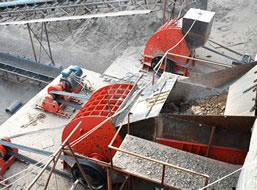
Service Plans:
Platinum Coverage Includes all wear parts except hammers ($15,600/year)
FAQ
Q What’s the minimum facility height requirement for installation? A Systems require 5m vertical clearance for full maintenance access
Q Can existing dust collection systems integrate with this equipment? A Compatibility depends on airflow volume—most units need 3,500 CFM capacity 
Q How does humidity affect performance? A Optimal operation requires <65 RH—optional dehumidifying feeders available for tropical climates
Q What’s the typical payback period? A Facilities processing >50 tons/day average ROI within months based on fiber recovery improvements
Q Are customized screen configurations possible? A Yes—we provide test milling services to determine optimal screen geometry for your material