
Table of Contents
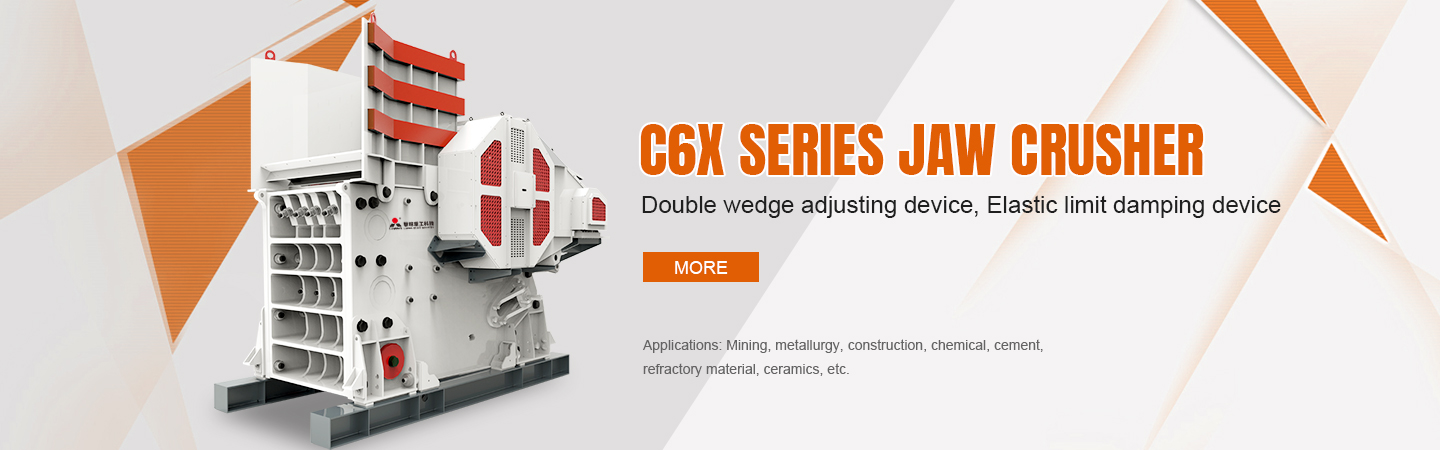
The operation theory of jaw crushing equipment (jaw crushers) revolves around the compressive force applied to materials between two rigid surfaces—a fixed jaw and a movable jaw. Here’s a breakdown of the key principles:
1. Basic Working Principle
- Fixed Jaw & Movable Jaw: The jaw crusher consists of two vertical jaws—one stationary (fixed) and the other moving (swing jaw).
- Crushing Motion: The movable jaw exerts force on the material by moving in an elliptical or reciprocating motion, compressing it against the fixed jaw.
- Compression & Fracture: When the material is subjected to high compressive stress, it fractures along natural fault lines (cleavage planes), reducing its size.
- Toggle Plate Mechanism: Controls the movement of the swing jaw and acts as a safety device in case of overload.
- Eccentric Shaft: Drives the reciprocating motion of the movable jaw via a pitman arm.
- Crushing Angle (Nip Angle): The angle between the jaws must be optimized (typically 20°–30°) to ensure efficient crushing without slippage or excessive wear.
- Single Toggle Jaw Crusher: Movable jaw moves in an elliptical path; simpler design but higher wear on jaws.
- Double Toggle Jaw Crusher: Uses two toggle plates for more complex motion, reducing wear but requiring more maintenance.
- Feed Size & Hardness: Larger or harder materials require more crushing force.
- Jaw Plate Design: Corrugated or smooth plates influence particle shape and efficiency.
- Discharge Setting (CSS – Closed Side Setting): Determines final product size; adjustable via hydraulic or mechanical systems.
- Primary crushing in mining, quarrying, and recycling.
- Processing hard rocks (granite, basalt) and ores (iron, copper).
- Reducing large feed sizes before secondary crushing (e.g., cone crushers).
2. Crushing Process Stages
1. Feed Intake: Material enters the crushing chamber from the top.
2. Compression Phase: The movable jaw moves toward the fixed jaw, squeezing the material.
3. Discharge Phase: The crushed material falls due to gravity when the jaws open, exiting through the discharge opening at the bottom.
3. Key Mechanical Concepts
4. Types of Jaw Crushers
5. Factors Affecting Performance
6. Applications
Jaw crushers are primarily used for:
7. Advantages & Limitations
✔ High reduction ratio (~6:1).
✔ Simple structure & reliable operation.
✖ Higher wear on jaws with abrasive materials.
✖ Less efficient for fine crushing compared to impact crushers..jpg)
Would you like details on maintenance or specific jaw crusher models?